

The Department was established in 2010 with the contribution of some of the faculty and researchers from the Department of Aerospace and Astronautical Engineering, and all of those from the Departments of Technical Physics and Electrical Engineering, with its core group of faculty and researchers from the Department of Nuclear Engineering and Energy Conversions.
As of November 14, 2025, the Department has adopted its new name: Department of Electrical and Energy Engineering (DIEE).
For scientific and functional reasons, the DIEE is divided into the following four sections:
Technical Physics Section
Via Eudossiana 18, 00184 Rome, Coordinator: Prof. Andrea Vallati
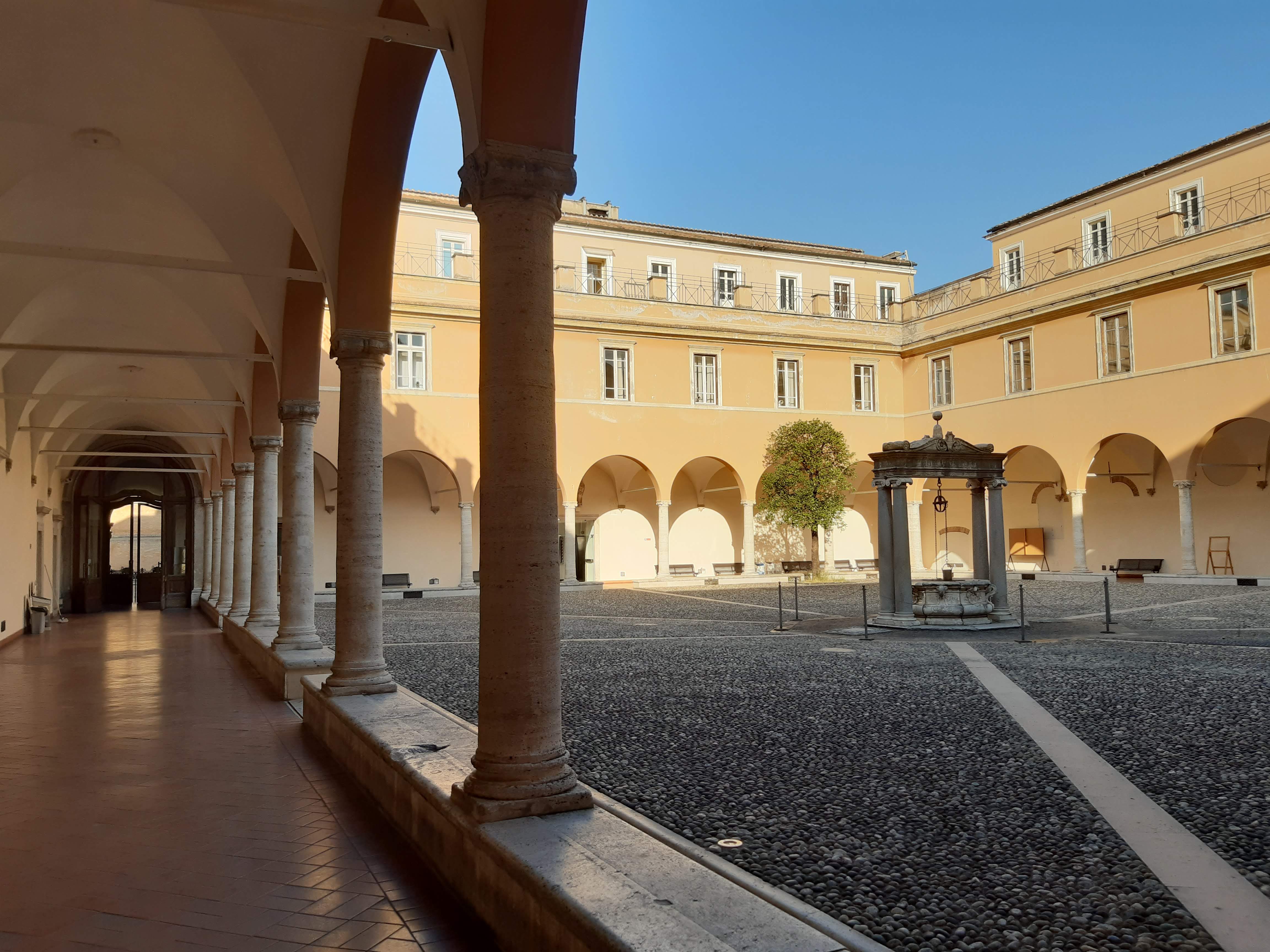
Technical Physics has been a subject taught since 1873, the year in which the School of Engineering, established by motu proprio by Pius VII in 1817, was transformed into the "School of Application for Engineers of Rome". In 1914, the Technical Physics Laboratory was transformed into the "Institute of Technical Physics". In 1983, following the university reform, it was divided between the newly formed Departments of Energy and Building Technology and Environmental Control (TECA). This division remained in effect until 1991, when the Department of Technical Physics was established, which remained operational until 2010, when it merged with the DIAEE, now DIEE.
Astronautical Engineering Section
Via Salaria 851, 00138 Rome, Coordinator Prof. Susanna Laurenzi
Ingegneria Electrical Engineering Section
Nuclear Engineering Section
Corso Vittorio Emanuele II, 244, 00186 Rome - Via Salaria, 851, 00138 Rome. Coordinator: Prof. Fabio Giannetti

Nuclear Engineering teaching and research activities began at Sapienza University of Rome in the second half of the 1960s, initially as a specialization program and then as an independent degree program. The Nuclear Engineering Area originated in 1980 with the establishment of the Institute of Nuclear Plants, which encompassed disciplines ranging from the fundamentals of Atomic and Nuclear Physics, to Nuclear Chemistry, Nuclear Plant Engineering, and Nuclear Safety and Radiation Protection. Following the 1982 university reform, the Institute contributed to the establishment of the Department of Energy in 1986. In 1990, the Nuclear Section of the Department of Energy separated from that department, contributing to the establishment of the Department of Nuclear Engineering and Energy Conversions (DINCE), which also included some faculty members from the Machinery Area. DINCE remained operational until 2008, when it merged with the Department of Electrical Energy. In 2010, this Department, along with other departments, formed the DIAEE.